Account funding and execution fees are separate line items.
Accounts hold state
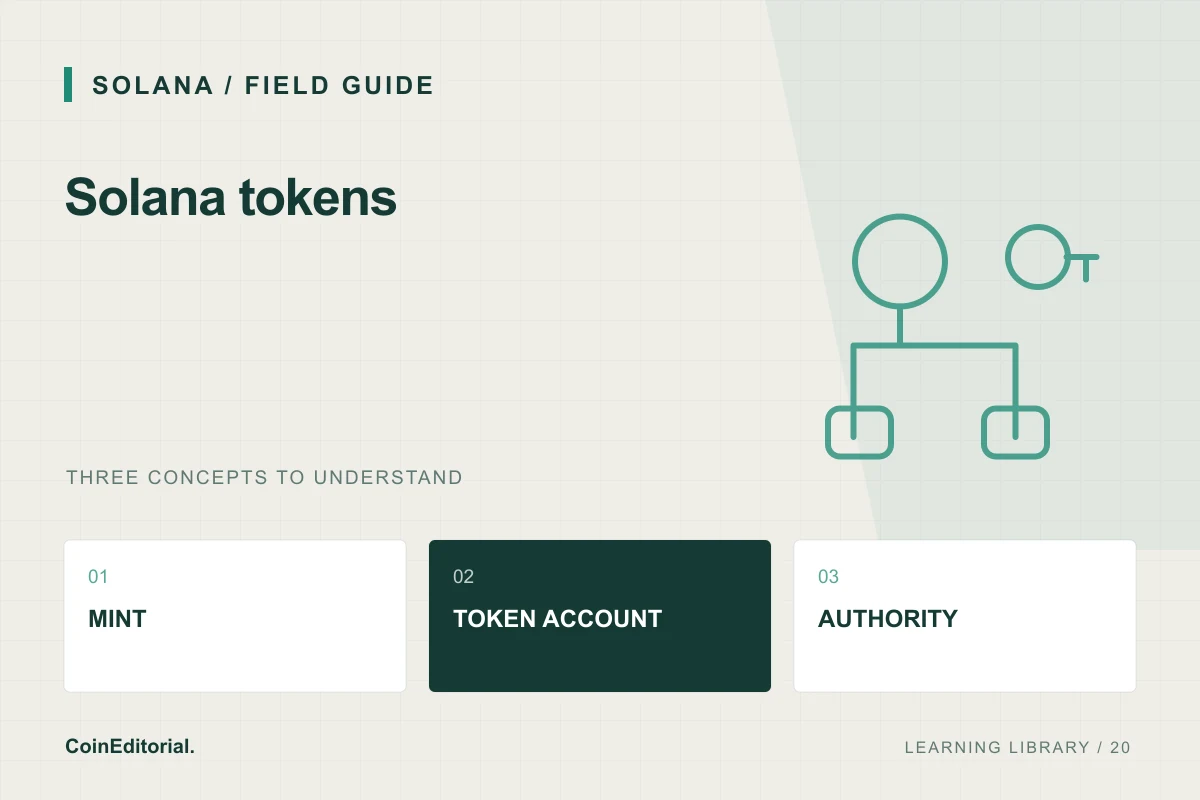
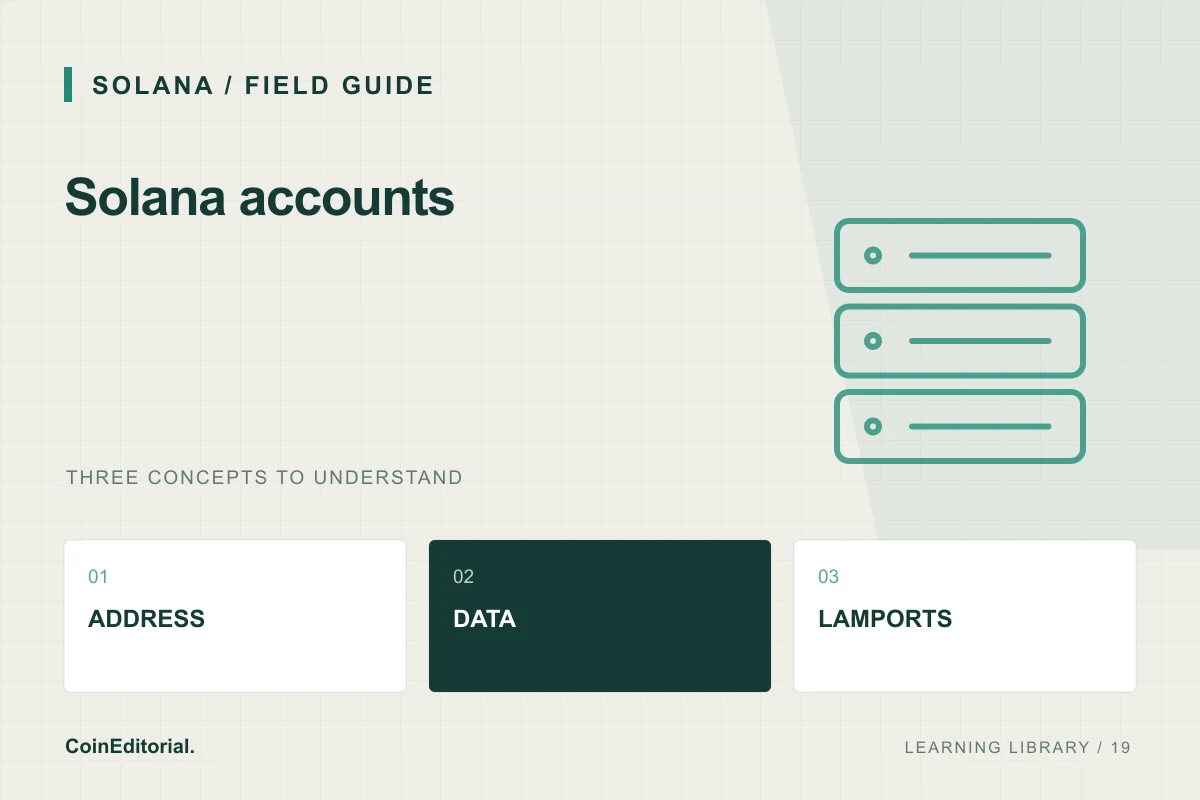
Solana stores state in accounts. Accounts carry fields including a balance in lamports, an owning program and data. In this context, the owning program is a technical authority over account data, not necessarily the human whose wallet you are viewing. Solana’s documentation explains minimum-balance requirements associated with storage, which can cause account creation to involve funding beyond the transaction fee.
Separate the charges
Imagine a wallet showing a network fee plus an additional amount needed to create a token account. Calling the whole amount a “swap fee” would obscure what happened. Part may fund an account rather than pay a service. Whether any balance can later be recovered depends on the account’s rules and state; a user should not assume every account can be closed immediately.
Why one wallet uses several accounts
A user-facing wallet address can be associated with multiple token accounts and other application state. A token balance therefore needs both an asset identity and the relevant token-account information. Counting all accounts as separate people would badly misstate user numbers. Conversely, seeing one wallet address in an interface does not mean all activity lives inside one undifferentiated balance.
Read an explorer with a purpose
Identify whether you are looking at a wallet, mint, token account or program. Note the owner program and the units used for balances. If an application asks to create something, understand the purpose before approving. Public inspection does not require sending keys to an explorer. The payoff is practical: account-related errors become easier to distinguish from insufficient SOL for fees or an unavailable trading route.
Sources & further reading
Sources checked 7 October 2026. Source-linked explanatory content; not personalised investment advice. Found an error? Request a correction.