Displaying an asset is not the same as supporting every operation it requires.
An extended token model
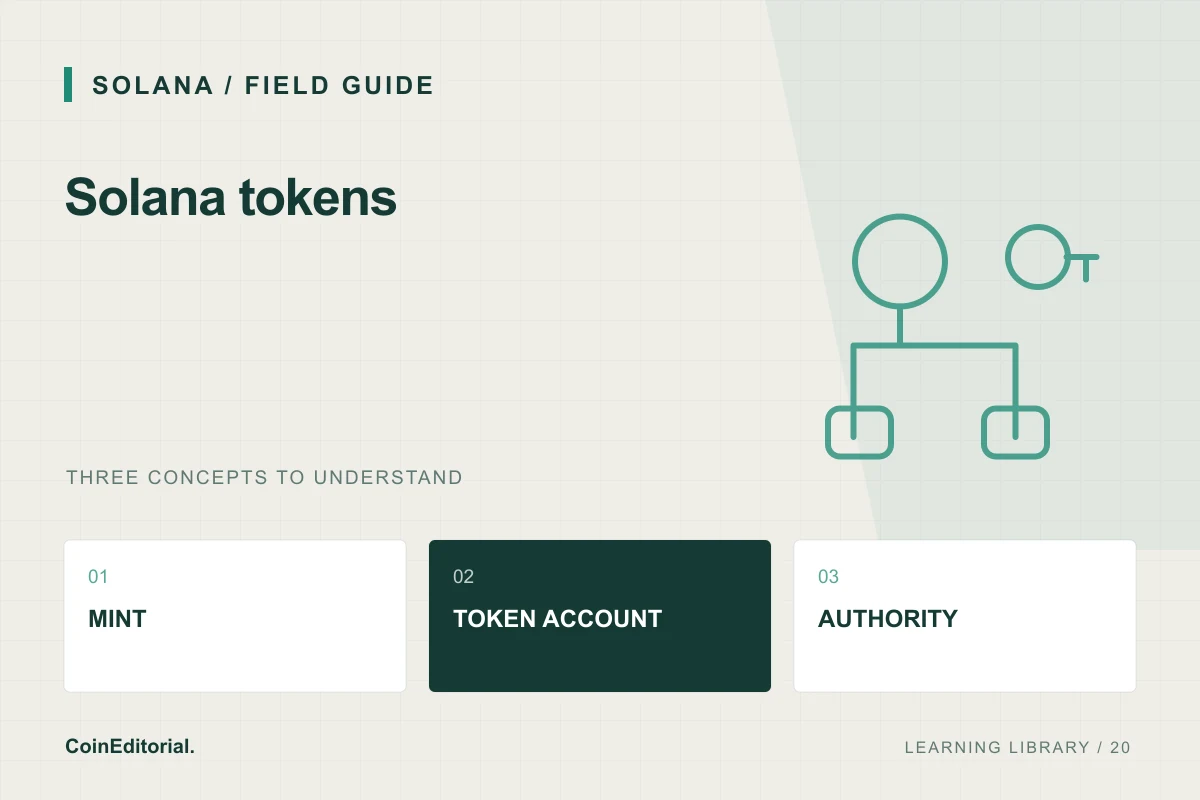
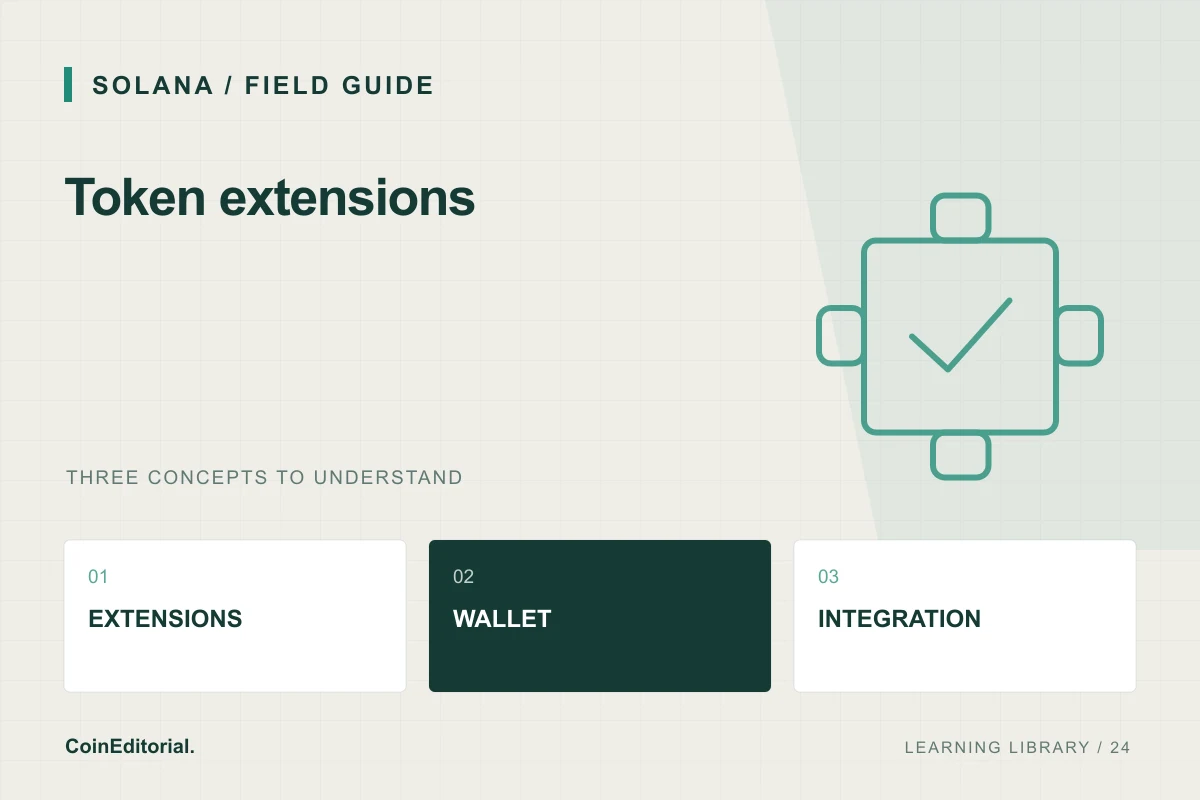
Solana’s Token Extensions program supports optional capabilities beyond the original token program. Official documentation covers features such as transfer fees and transfer hooks. Extensions must be examined on the actual mint and accounts. Their existence is neither inherently malicious nor a guarantee of useful functionality; the consequences depend on configuration and the applications interacting with the asset.
A compatibility example
Imagine a token that applies a configured transfer fee. A recipient’s increase can differ from the nominal amount sent. An accounting tool that assumes every token transfer credits the full amount may produce a mismatch. Similarly, an additional transfer condition can require an integration to handle more than the simplest token instruction. These examples explain why successful display is weaker evidence than tested operational support.
Check the whole path
A wallet, a DEX pool, a router and a receiving service can have different support policies. Confirm the specific asset and operation at each stage. A failed quote should not be interpreted as proof that the token cannot ever transfer, nor should one successful transfer be advertised as universal compatibility. Scope matters: say exactly which workflow was tested and when.
Questions for a token profile
Which token program is used? Which extensions are enabled? Who can change their settings? How are any fees or restrictions shown before signing? Link the answers to current public evidence. This gives users and developers something concrete to evaluate and prevents an asset’s familiar symbol or low network fee from hiding behaviour that matters to the intended transaction.
Sources & further reading
Sources checked 7 October 2026. Source-linked explanatory content; not personalised investment advice. Found an error? Request a correction.