A data-access failure is not evidence that an on-chain balance is zero.
The interface to network data
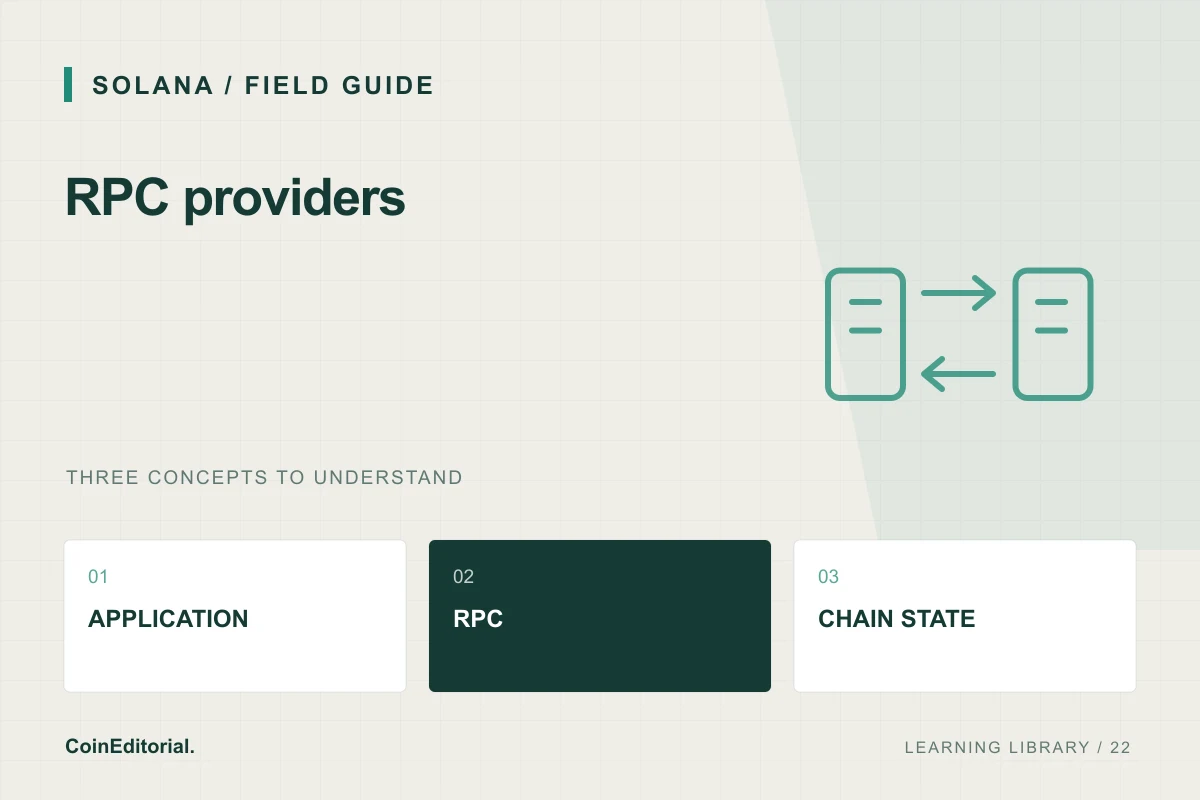
Applications use remote procedure calls to request blockchain information and submit transactions. An RPC provider supplies that interface; it is not the token issuer or the wallet’s owner. Solana documents methods and commitment settings. Providers can differ in access limits, supported history and freshness, so an application should not silently treat every response as an equally current view of the network.
Missing is different from zero
Imagine a portfolio request times out. Replacing the unavailable result with a zero balance would misinform the user. A better interface retains the last observation with its timestamp or clearly reports that current data could not be retrieved. The same principle applies to holder counts, transaction history and token metadata: absence of a response is not a measurement of absence.
Compare like with like
Before diagnosing a mismatch, confirm the same network, address, asset, commitment level and units. Then compare timestamps or slots where available. One interface may rely on a separately refreshed index rather than a direct chain query. Describe that distinction. Querying a second source can help investigate, but agreement between two services is not automatically independent proof if both rely on the same upstream system.
Operational lessons for builders
Keep provider credentials on the server when they are intended to be private, handle limits explicitly and make freshness visible. Test outages without sending real transactions. For users, avoid repeatedly approving wallet prompts to “fix” a read-only data problem. A public balance query should not require a recovery phrase or a transfer to a support account. Clear error handling is part of trustworthy infrastructure.
Sources & further reading
Sources checked 7 October 2026. Source-linked explanatory content; not personalised investment advice. Found an error? Request a correction.